 |
|
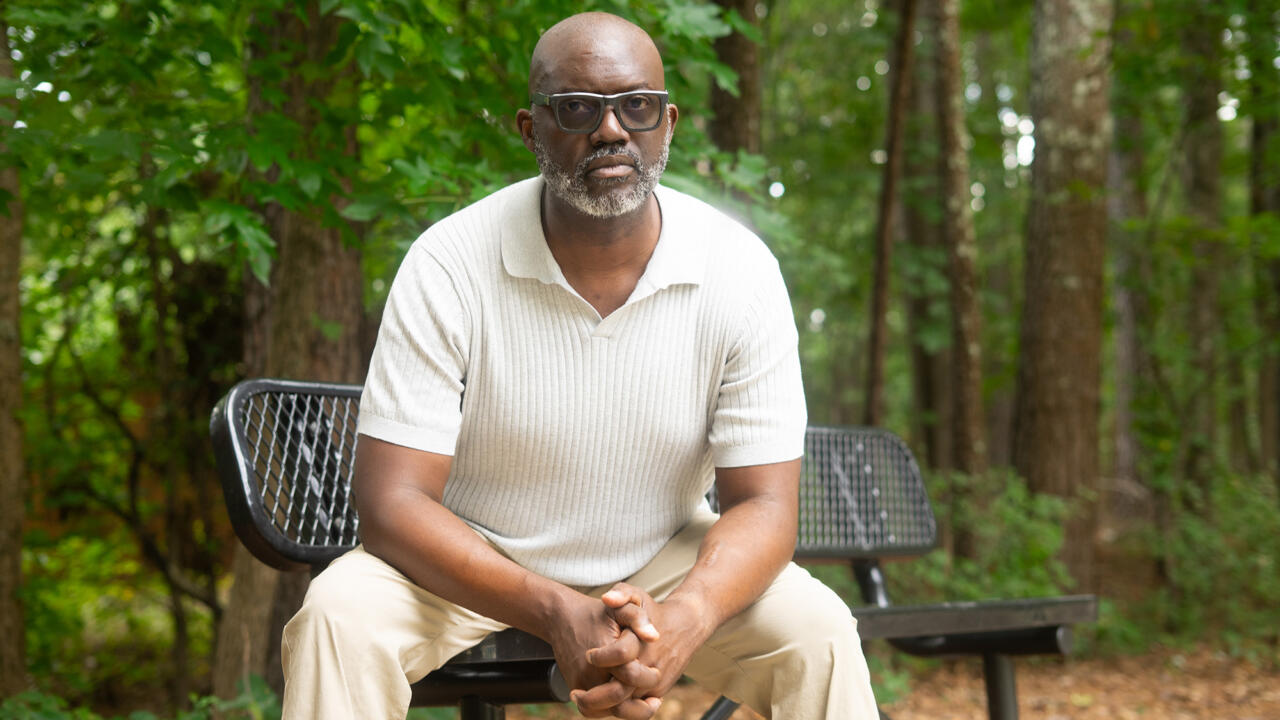
Craig Merritt spent years on dialysis, not knowing that a medical calculation made it harder for Black patients like him to get on the kidney transplant waitlist. Photo by Rita Harper for Word In Black |
|
|
|
Good morning, CalMatters reader.
For three years, every Monday, Wednesday, and Friday, Craig Merritt sat tethered to a dialysis machine, his blood cycling through tubes as he wondered: Why me?
The answer lay inside an algorithm that delayed Merritt’s dialysis and when he could go on the kidney transplant list, because he is Black. For decades, doctors across the U.S. used an algorithm called the estimated glomerular filtration rate (eGFR). For Black patients, the formula automatically added extra points – supposedly because Black people “have higher muscle mass.” Those few extra points made their kidneys look healthier on paper, delaying their treatment.
U.S. Health System Reporting fellow Anissa Durham’s in-depth reporting for Word in Black and copublished with The Markup shows how dozens of medical algorithms still adjust for race, everything from lung function tests to heart risk scores. The clinical algorithms are tools designed to help health care providers make decisions by giving them a methodical approach to diagnosing, treating, and managing medical conditions. But many are based on the racist belief that there are biological differences between Black and white patients – the same argument used to justify slavery.
As of March 2025, there are 42 risk calculators, 15 medications, five medical devices, five lab test results, and one therapy recommendation that still use race and ethnicity to some capacity in medical decision making, Durham reported.
|
|
|
|
|
Our nonprofit, nonpartisan newsroom depends on support from people like you.
|
|
|
|
|
Some physicians and hospital systems are fighting to keep the race-adjusted algorithms. “A lot of these tools were done as a well-intentioned progressive effort to do well by Black patients, in the spirit of personalized medicine,” said David Jones, a trained psychiatrist and the A. Bernard Ackerman professor of the Culture of Medicine at Harvard University.
In 2022, the national transplant network banned the use of race-based formulas for kidneys. Merritt finally got a transplant in November 2023, after hospitals were ordered to credit lost years of waiting on dialysis back to Black patients like him.
No one knows how many patients died waiting for a kidney because of the medical algorithm, Durham writes.
“Think about how many brothers and sisters, uncles, aunties, moms, dads, grandmothers, grandfathers that should have had a kidney or (been) placed on dialysis a lot sooner,” said Merritt.
|
|
|
|
|
|
-
Racial Justice Act. Gov. Gavin Newsom signed a bill into law that will allow incarcerated people more avenues to have their cases reviewed for racial bias. AB 1071 makes changes to the original Racial Justice Act, signed in 2020. Four years after the Racial Justice Act went into effect, defendants in only about a dozen cases had succeeded in proving bias affected their criminal cases, an investigation by The Garrison Project and CalMatters found.
-
Care providers. The governor signed a controversial bill allowing a broad range of relatives to step in as children’s caregivers if their parents are deported, legislation that had provoked a firestorm of conservative criticism, CalMatters’ Jeanne Kuang reports.
-
Legal counsel. Newsom also approved AB 1261, which will ensure access to legal counsel for unaccompanied minors and other young immigrants residing in California who are placed in federal immigration removal proceedings. Last fiscal year, of the 99,381 unaccompanied children released nationwide from the Office of Refugee Resettlement, approximately 11%, or 10,819 children, made their home in California.
-
Pay hike. Hundreds of California’s incarcerated firefighters will see an increase in pay, a new death benefit, and a faster path to expungement of their criminal records under laws Newsom signed.
|
|
|
|
|
Advertisement |
 |
|
|
|
|
|
|
|
|
|
Wendy Fry
California Divide Reporter |
|
|
|
|
|